Article: What Makes Organic Cotton Fleece Different?
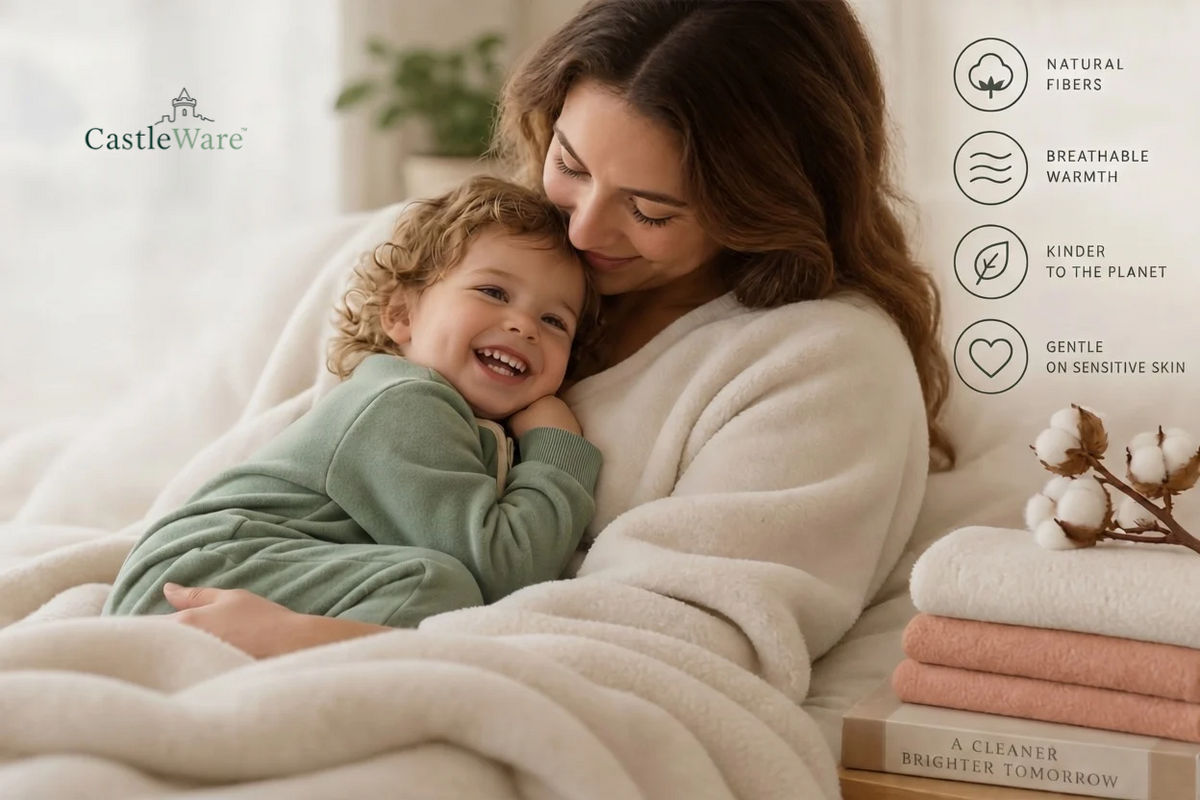
What Makes Organic Cotton Fleece Different?
Say the word "fleece" and most people picture something like a fuzzy polyester jacket or a slippery stadium blanket. It is an easy assumption, but it is not the full picture. Fleece describes how a fabric is constructed and finished, not what it is made from. Fleece can be made from different fibers, including polyester and cotton, and those two versions behave very differently.
So what is the actual difference between organic cotton fleece and conventional polyester fleece, and why might it matter when you are choosing clothing or bedding for your family? That is the question we will answer here.
At CastleWare, our fleece collection is made from 100% GOTS-certified organic cotton rather than polyester microfleece, and there are good reasons for that choice.
What Is Fleece Actually Made From?
Here is the biggest misconception to clear up first. Fleece is a type of fabric, not a specific fiber. Any knitted fabric with a brushed, fuzzy surface can be called fleece.
Polyester fleece is made from synthetic fibers created from petroleum-based plastic. Cotton fleece is knitted from cotton yarn, then brushed so the interior becomes plush and fuzzy while the outer surface stays flatter. Because both fabrics get that soft brushed finish, two garments labeled "fleece" can feel similar on the shelf while having completely different fiber content.
The takeaway for shoppers is simple. Look beyond the word fleece and check the actual fiber listed on the label.
Organic Cotton Fleece vs. Polyester Fleece
Now for the direct comparison.
|
Organic Cotton Fleece |
Polyester Fleece |
|
|
Fiber source |
Cotton plants |
Synthetic polymer made from petroleum |
|
Breathability |
Breathes well while holding warmth |
Traps heat and limits airflow |
|
Feel |
Dense, plush, softens with washing |
Slippery, prone to static and pilling |
|
Moisture |
Absorbs moisture from the skin |
Resists moisture and dries quickly |
|
Shed fibers |
Natural cotton fibers that break down |
Plastic fibers that persist |
We think some of these points deserve a bit more conversation. Cotton's ability to breathe while still providing warmth is exactly why we use it in our pajamas, sleeper bags, and blankets. The brushed interior creates soft insulation, while the natural fiber lets air and moisture pass through instead of trapping them against the skin.
The last row of the chart matters too. All fabrics shed tiny fibers as they wear and wash. When cotton sheds, it releases a natural plant fiber. When polyester sheds, it releases a tiny piece of plastic. That difference leads us to a topic that has been in the news a lot lately.
What Are Microplastics, and What Do They Have to Do With Fleece?
Though they are really hard to see because they are so tiny, microplastics are very small plastic particles. They come from many sources, and laundry is one. Synthetic fabrics like polyester release tiny plastic fibers as they wear and wash, and those fibers flow out with the wastewater. Many are too small for treatment systems to capture, so they reach rivers, lakes, and oceans, where they can persist for a very long time.
Polyester fleece is a particularly heavy shedder. In one study comparing different polyester fabrics, fleece shed far more fibers during washing than any other construction tested. All that brushing that makes fleece fuzzy also makes its fibers easier to release.
Microfiber vs. microplastic
Not every microfiber is a microplastic. Research shows that both natural and synthetic textiles shed microfibers in the wash. Cotton sheds tiny fibers too. Here’s the difference:
-
Cotton fibers are plant-based and break down naturally
-
Polyester microfibers are made of plastic and stick around
We encourage you to keep that distinction in mind. Choosing cotton fleece doesn't stop shedding altogether. Rather, it means the fibers your laundry releases aren't plastic.
What Makes Organic Cotton Different From Conventional Cotton?
Choosing cotton over polyester is a big step, but it is not the whole story, because how the cotton is grown and handled matters too. Conventional cotton farming relies heavily on chemical inputs. Every stage of organic cotton production, from growing and processing to dyeing and finishing, is built around supporting ecosystem health and limiting toxic pesticides, synthetic fertilizers, and hazardous processing chemicals.
The organic designation extends beyond the farm. What happens in the mill, the dye house, and the finishing plant counts, too. That is why GOTS certification checks every stage from field to finished fabric.
At CastleWare, our organic cotton fleece is GOTS certified, preshrunk using plain hot water instead of chemical treatments, and never coated with chemical finishes. You can learn more about how we knit, dye, and finish everything on our fabrics page. Every piece is also made in the USA, from fiber to finished garment.
Why Fabric Choice Matters Even More for Babies and Children
Consider the amount of time a baby spends in pajamas, sleeping bags, and blankets. For many of our tiny ones, this is more than half of each day, cloth touching their skin directly. It's little wonder parents want to know exactly what these textiles are made of.
The fuzzy surface is on the inside where it counts, and our organic baby fleece is heavy and cuddly but light. It’s a nice mix for the cooler months and is designed to be breathable while still keeping you warm.
There is no one fabric that works for every sleep setting, so always follow safe sleep guidelines and outfit your child for the temperature of the room. However, for families who would rather swaddle their kids in natural fibers rather than plastic-based ones, cotton fleece is a great match.
How to Tell What Kind of Fleece You're Buying
Check the product site and label before you buy. Don’t trust the phrase “fleece.” Check the fiber content and see if the fabric is cotton or polyester. If it is cotton, check whether it’s certified organic, and look for certifications such as GOTS. Finally, search for details on dyes, finishing procedures, and where the fabric is manufactured. Brands that do things right are happy to share.
Here’s What to Take Away About Organic Cotton Fleece
So what makes organic cotton fleece different? Both fabrics offer warmth and softness, but they start from fundamentally different fibers. One begins as plastic. The other begins as a plant, grown and processed with ecosystem health in mind. For families thinking about synthetic materials, chemical processing, or plastic microfiber shedding, understanding what "fleece" really means makes it easier to choose well.
Ready to feel the difference? Explore our full collection of organic cotton fleece sleepers, cotton fleece pajamas, and blankets, all waiting to make cool nights a little cozier.

Written by CastleWare LLC