What Is Organic Cotton and Why Does It Matter for Babies?

As parents, we’re constantly faced with decisions. What should we feed our kids? What schools should they attend? When should we put them to bed? And yes, even what they should wear to bed for a good night’s sleep. And as far as that last one goes, what your baby sleeps in really does matter.
And here’s the thing. We’ve all heard about the benefits of organic cotton and what that can mean for the skin. But do we really know why organic cotton is the best choice? In this article, our team here at CastleWare will tell you what you’ve been wanting to know.
How Much Time Do Babies Spend in Sleepwear?
When babies are first born, they sleep a lot. It’s perfectly normal for a new baby to sleep anywhere from 14 to 17 hours per night. Even as your child grows, they spend a lot of time sleeping. And this is great because good sleep is one of the things that helps a baby grow healthy and strong.
That said, many parents choose to keep their newborns in sleepwear. Even toddlers spend quite a bit of time in their pajamas. And the rationale is simple. High-quality sleepwear can be comforting for young children and can actually help them to get higher-quality rest.
That’s one of the reasons why fabric choice matters more than many parents initially realize. Babies can be sensitive to rough textures, overheating, or fabrics that trap too much heat during sleep. Soft, breathable materials may help little ones stay more comfortable throughout the night, especially during long stretches of rest. When pajamas feel gentle against the skin and help regulate temperature, babies are often less distracted by discomfort and better able to settle into sleep.
What is Organic Cotton?
Have you ever worn anything made from cotton? Chances are that you have. And if so, you know that cotton can be incredibly soft and comfortable. In fact, cotton is one of the most widely used textile fibers in the world and accounts for roughly one-quarter of global fiber use each year. Simply put, cotton is a natural fiber that comes from the fluffy part of the cotton plant.
However, though cotton and organic cotton come from the same plant, the approach to how they are grown is vastly different. Organic cotton is produced without many synthetic pesticides, harsh chemical treatments, or genetically modified seeds that are often used in large-scale farming. For many parents shopping for organic cotton baby clothes, that difference matters.
You may also see the term GOTS-certified organic cotton. GOTS stands for the Global Organic Textile Standard, which sets guidelines for organic fibers and manufacturing practices. At CastleWare, our knitted fabrics are made in the USA using pure organic cotton, something many families appreciate when paying closer attention to fabric quality and sourcing.
|
Farming Stage |
Conventional Cotton |
Organic Cotton |
Impacts on Babies & Children |
Supporting Research & Clinical Sources |
|
Seeds |
Genetically Modified (GMO) |
Untreated, non-GMO |
Increases overall early childhood exposure to residual agricultural chemicals by requiring heavier application of broad-spectrum herbicides. |
Institute for Exposomic Research at Mount Sinai (2024). |
|
Soil Nutrition |
Synthetic nitrogen fertilizers |
Crop rotation, compost |
Nitrate runoff contaminates drinking water. When nitrate-heavy water is used to mix infant formula, it can cause infant methemoglobinemia (blue baby syndrome), which inhibits oxygen transport in the blood. |
Centers for Disease Control and Prevention (CDC); Minnesota Department of Health. |
|
Weed Control |
Synthetic herbicides (Glyphosate) |
Manual hoeing, tractor cultivation |
Prenatal and early childhood exposure is linked to altered hormone signaling (endocrine disruption) and a significantly increased risk of metabolic syndrome and liver inflammation by age 18. |
Center for Environmental Research and Community Health, UC Berkeley; The Infant Development and Environment Study (TIDES), Mount Sinai. |
|
Pest Control |
Toxic neuro-active insecticides (Organophosphates) |
Beneficial insects, trap crops |
Developing pediatric nervous systems are highly vulnerable. Prenatal and childhood exposure is associated with lower cognitive scores, delayed mental development, and increased risk of pervasive developmental disorders. |
CHAMACOS longitudinal birth cohort study (published via CDC Stacks); Environment International. |
|
Harvest Prep |
Chemical defoliants (Tribufos) |
Natural frost, water deprivation |
Environmental drift exposes children in agricultural areas to cholinesterase inhibitors (which overstimulate the nervous system) and triggers severe skin, eye, and respiratory irritation. |
Environmental Protection Agency (EPA) Safety Data Sheets; Earthjustice Pesticide Risk Assessments. |
The transition from raw conventional cotton to a finished garment requires extensive chemical processing. While the intense washing and milling stages remove the majority of raw agricultural pesticides, the manufacturing process introduces an entirely new class of synthetic treatments designed to dye, bleach, and finish the fabric.
Because infant skin is up to 30% thinner than adult skin, highly porous, and has a higher surface-area-to-body-weight ratio, babies absorb topical substances at a significantly faster rate. When children wear conventionally processed cotton, particularly for 12 to 14 hours a day during sleep, they are exposed to these embedded chemicals.
Organic Cotton vs Synthetic Fabrics for Baby Sleepwear
To understand the significance of the type of fabric that your baby wears to bed, let’s talk about some of the usual things that parents do to protect their baby’s delicate skin. First, we wash their clothes in gentle detergents. We keep their skin moisturized with special lotions designed specifically for babies and toddlers. We even pay close attention to the soaps, shampoos, and bath products that touch their skin every day.
So, when you think about it, it stands to reason that we should also pay attention to the types of materials that are used in our baby’s clothing. However, many parents don’t realize that baby clothing is often made with fabrics that can cause skin irritation.
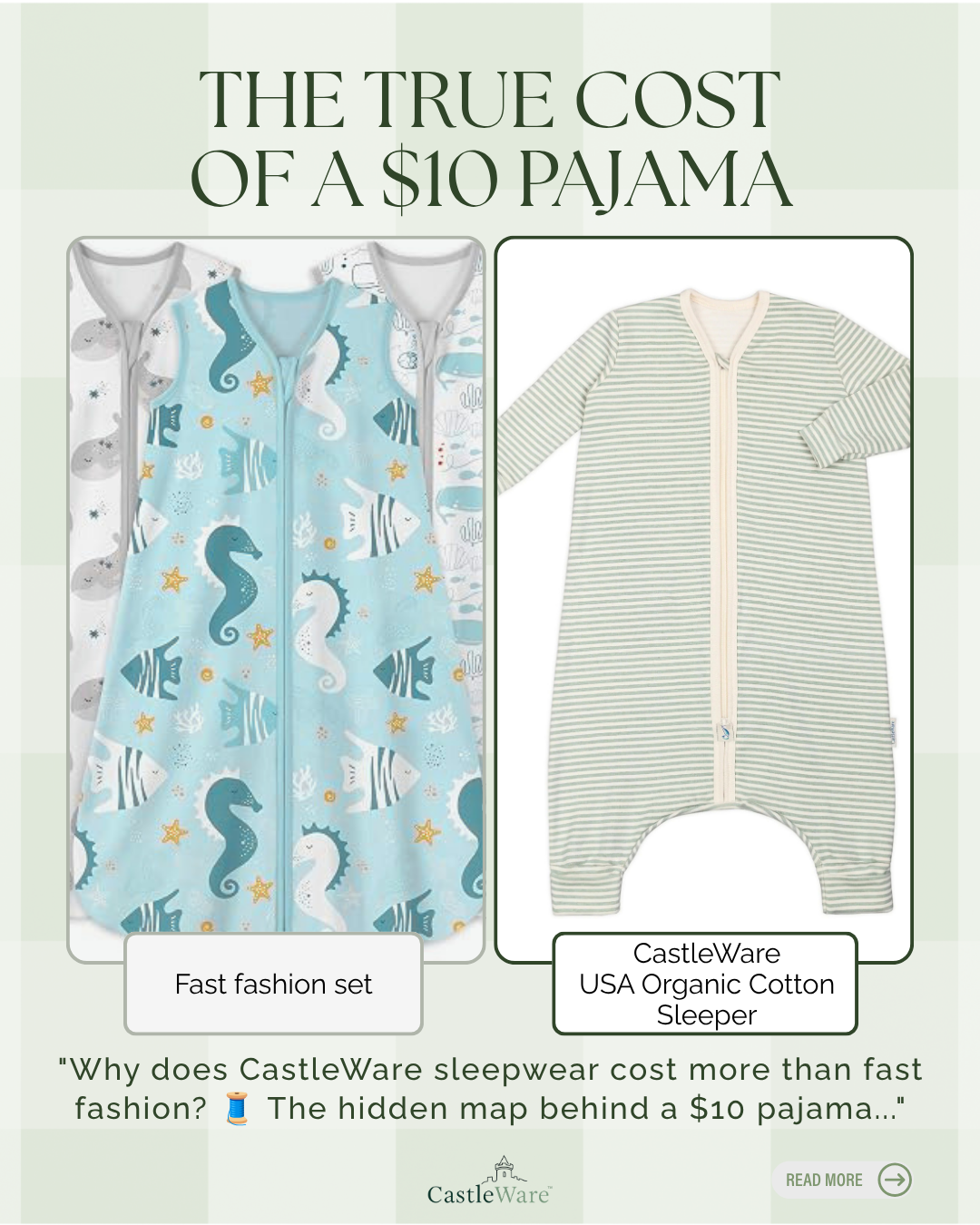
Synthetic fabrics like polyester and synthetic fleece are commonly used in children’s sleepwear because they are inexpensive and widely available. Unfortunately, synthetic materials often feel heavier. These heavy materials can also trap heat and create static, which can be quite uncomfortable for little ones, especially in the winter.
Conversely, natural fibers like cotton are softer and lighter. That’s why so many moms and dads look for breathable baby sleepwear made from organic cotton. Further, when it’s cold outside, organic cotton fleece can offer warmth without the same overly slick or overly warm feeling that some synthetic fabrics create.
Why Organic Cotton Matters for Babies With Sensitive Skin
As we alluded to earlier, babies have delicate skin. It’s not unusual for parents to notice dryness, redness, or irritation during the first few years of life. Because pajamas and sleepwear stay against the skin for long periods of time, many families pay closer attention to the types of fabrics their children wear overnight.
Organic cotton is often chosen because it feels soft and lightweight without the slick texture that some synthetic fabrics can have. Knitted organic cotton fabrics also move comfortably with active babies and toddlers who toss and turn while sleeping.
Here are some of the most common baby skin concerns that parents worry about :
- Dry or flaky skin
- Heat rash
- Mild irritation
- Overheating during sleep
- Sensitivity
- Chafing around the neck, wrists, or ankles
The reasons we just shared are exactly why today’s savvy parents are choosing softer, organically-grown fabrics that can protect their baby’s skin and create a more comfortable bedtime routine.
Choose USA-Made Organic Cotton Sleepwear
At CastleWare, we believe that even the smallest of details can make the biggest difference. From softness and breathability to fabric sourcing and quality craftsmanship, many parents appreciate knowing exactly what touches their child’s skin each night.
We use pure GOTS-certified organic cotton knitted fabrics for all of our sleepwear. And, our organic cotton is grown in the USA. This means comfortable sleepwear that parents are proud to put on their babies and young children.
Whether you are shopping for lightweight pajamas or cozy organic cotton fleece for cooler nights, our goal is simple: thoughtfully made sleepwear designed with growing families in mind. Shop CastleWare pajamas today to see our latest organic cotton sleepwear collections.
Why is organic cotton preferred for babies?
Organic cotton is a preferred apparel choice for babies because it is soft, lightweight, and comfortable against a baby’s vulnerable skin. Parents often prefer to dress their babies in clothing that isn’t made with harsh chemicals, which are often used in conventional fabric production.
What does it mean to say that organic cotton is breathable?
Babies commonly sweat when they are sleeping, and many fabrics don’t absorb the moisture that comes from those perspiration. A breathable fabric absorbs moisture, keeping it away from the skin. This can help babies sleep better.
What is the healthiest fabric for babies to sleep in?
Parents tend to gravitate toward natural fibers for baby sleepwear, and organic cotton sits at the top of the list. This fabric is soft, lightweight, and highly breathable, which can keep babies comfortable while also protecting their skin.

Written by CastleWare LLC