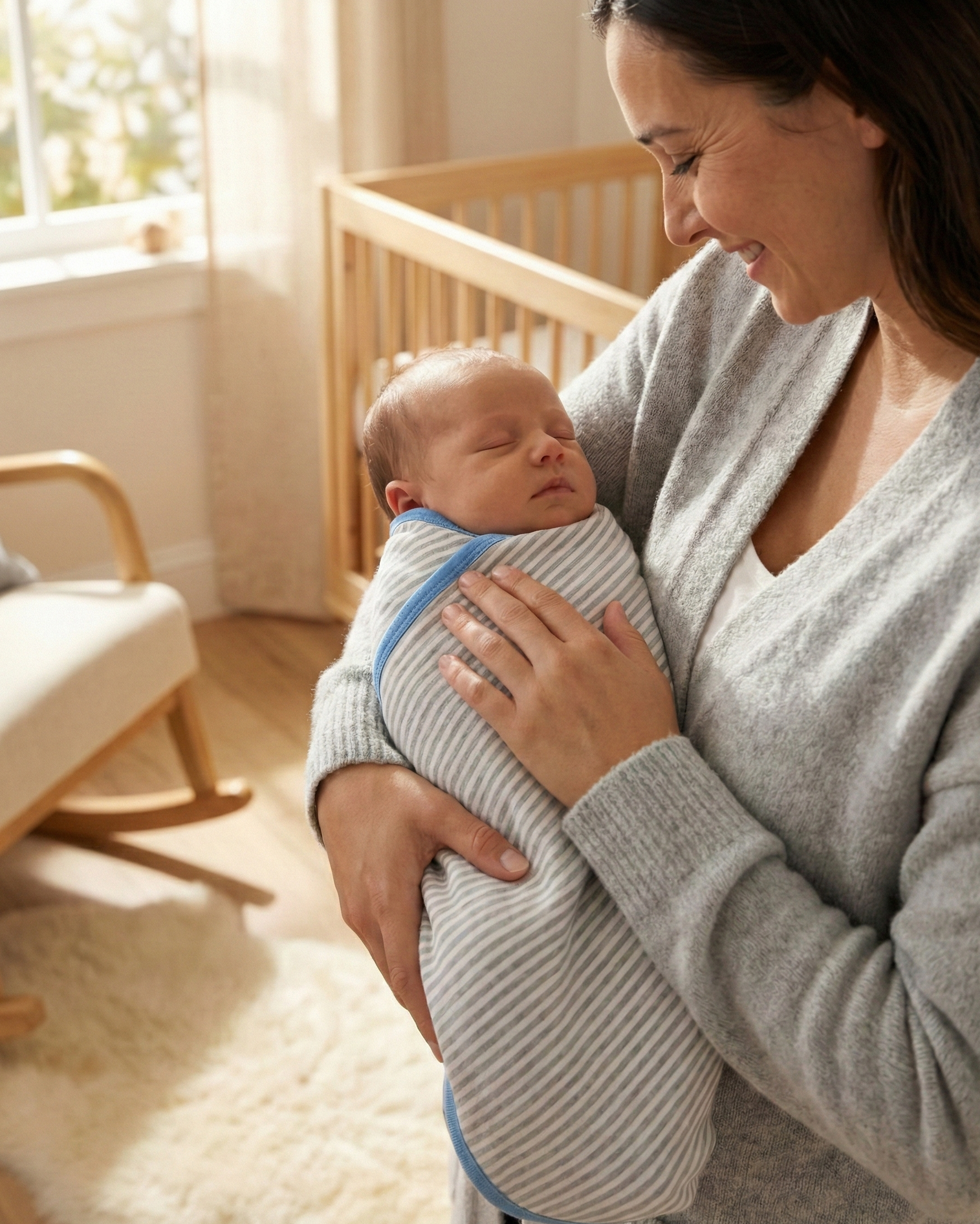
Article: What’s Actually Touching Your Baby’s Skin All Night?

What’s Actually Touching Your Baby’s Skin All Night?
The fabric your baby sleeps in matters more than most parents expect. Stanford Medicine suggests that babies spend 11 to 17 hours per day during their early lives sleeping, and what they wear directly affects how warm, comfortable, and rested they are.
And there are so many things that affect how well your baby sleeps (and if you’ll be getting up with them repeatedly throughout the night). Things like temperature regulation, skin sensitivity, and breathability all play a major role. This is why so many parents are thoughtful about the type of sleepwear that they put their babies in when nighttime rolls around.
So, if you are one of those parents wondering about the differences between organic cotton and synthetic sleepwear, so you can make an informed choice, this article is for you.
Quick Answer: What Is the Best Fabric for Baby Sleepwear?

Organic cotton is widely regarded as the best fabric for baby sleepwear because it is soft, breathable, and gentle against delicate skin during long overnight hours. Synthetic fabrics like polyester can offer advantages in durability and moisture-wicking, but they tend to trap heat and generate static. For parents comparing organic cotton vs polyester, temperature regulation and skin comfort should be the primary deciding factors.
Why Fabric Choice Matters During Sleep
Parents spend a lot of time lotioning up their baby’s skin, adjusting the thermostat, and making sure their baby is fed before putting them down for the night. But so many parents overlook the actual fabric of their child’s sleepwear.
Babies Regulate Temperature Differently Than Adults
Newborns and young infants cannot regulate their body temperature the way adults do. Their thermoregulatory systems are still developing, which makes them vulnerable to overheating. Because babies cannot kick off blankets or adjust their clothing, what they wear to sleep is one of the most direct ways parents can manage overnight safety and comfort.
Fabric plays a significant role. Breathable materials allow excess heat to escape, while fabrics that trap heat create a warm, stuffy microclimate against the baby's skin.
What Parents Should Look for in Sleepwear
Here are the things we like to prioritize when it comes to choosing sleepwear for babies:
-
Breathability: The fabric should allow airflow to prevent overheating.
-
Softness: Baby skin is sensitive; rough or scratchy fabrics can cause irritation during extended wear.
-
Stretch and movement: Babies shift throughout the night; fabric with natural give lets them move freely.
-
Moisture management: The fabric should not hold moisture against the skin.
-
Consistent overnight comfort: The best fabric for baby sleepwear maintains a stable feel from bedtime through morning without clinging or bunching.
Organic Cotton Sleepwear: Benefits for Overnight Comfort
When you put on your own pajamas, do you choose something that’s scratchy or likely to trigger night sweats? Of course not. And you’ll want to take a similar approach in choosing what your baby should wear, too.
Breathability and Airflow
Natural fibers allow air to pass through the weave, so heat can dissipate rather than build up. For babies who tend to sleep warm, this makes a meaningful difference. Many parents choose breathable baby pajamas made from organic cotton specifically because the fabric works with the body's natural temperature cycles. Organic cotton is also grown without synthetic pesticides and processed without harsh chemical finishes, which means fewer residues in contact with skin overnight.
Softness for Sensitive Skin
Cotton knit fabrics have a soft, supple feel that most babies tolerate well, even those prone to eczema or general irritation. Because babies sleep for long, uninterrupted stretches, even minor fabric roughness compounds over hours. Organic cotton's naturally soft texture reduces friction and the risk of contact irritation.
Organic Cotton Knit vs. Organic Cotton Fleece
We know that understanding the different fabric terms can be confusing. So, here are some simple definitions to help you understand the differences between organic cotton knit and organic cotton fleece.
-
Organic Cotton Knit is lightweight, flexible, and ideal for year-round use. It stretches easily with a baby's movements and drapes softly without adding bulk. On warmer nights or in rooms that run above 68°F, a single layer of organic cotton knit is typically sufficient.
-
Organic Cotton Fleece is brushed on the inside for added warmth and is the better choice for cooler temperatures. It provides the thermal comfort parents often expect from synthetic fleece but without the heat retention and static that synthetic materials generate.
Synthetic Sleepwear: What You Should Know
Synthetic baby sleepwear typically includes polyester, polyester fleece, cotton-poly blends, or microfiber. We won’t deny that these materials have some benefits. They tend to last a long time despite repeated washes, are wrinkle-resistant, and dry faster. But where they fall short is in overnight wear. Polyester and synthetic fleece do not breathe as freely as natural fibers, so heat builds up rather than being released. Synthetic materials also generate static electricity, which causes clothing to cling uncomfortably against a baby's skin throughout the night.
But heat and comfort aren’t the only factors to pay attention to. We’re seeing lot of research on what may actually be in synthetic fabrics. A 2025 study published in Environmental Research analyzed 43 infant garments and identified 303 distinct chemicals across the fabrics, including pesticides, flame retardants, plasticizers, and even pharmaceutical residues. The researchers found that many of these compounds leached from fabrics under ordinary conditions, such as washing, wear, and aging. This is especially concerning for sleepwear, where skin contact is prolonged and uninterrupted.
Our own research into conventional baby pajama brands found that many include substances such as formaldehyde, phthalates, and synthetic dyes. These chemicals are routinely used in textile manufacturing, which are not required to be disclosed on labels. The absence of broad chemical regulations for infant textiles in the U.S. means that parents often cannot tell what is in a garment just by reading the tag. GOTS-certified organic cotton provides one of the clearest assurances that a fabric has been screened and meets strict limits on chemical inputs from fiber through finished garment.
Let’s Compare Organic Cotton vs. Polyester
Let’s do a quick side-by-side comparison of organic cotton vs. polyester so that you can make a more informed decision for your baby.
|
Feature |
Organic Cotton |
Polyester |
|
Breathability |
High; allows air circulation |
Lower; can trap heat |
|
Softness |
Very soft, gentle against skin |
Can feel rougher or slick |
|
Temperature regulation |
Supports natural cooling |
Tends to retain body heat |
|
Static |
Minimal |
Can generate static cling |
|
Skin sensitivity |
Gentle; suitable for sensitive skin |
May irritate reactive skin |
|
Wash durability |
Good with proper care |
High; resists wear over time |
|
Environmental impact |
Lower; no synthetic pesticides |
Higher; petroleum-based fiber |
If you are comparing organic cotton vs. polyester for overnight sleep, here’s what matters most:
-
Breathability
-
The feel against your baby’s skin
And remember that daytime wear is short-duration exposure. Sleepwear, on the other hand, is worn for ten to twelve hours at a stretch, which magnifies whatever the fabric does well or poorly.
Choosing the Right Fabric for Your Baby's Sleep Environment
Room temperature is the starting point. Keeping a baby's sleep space between 68°F and 72°F is a common recommendation. In a cooler room, organic cotton fleece or a heavier knit is appropriate; in a warmer room, a lightweight organic cotton knit is the better choice.

Having both fabric weights on hand means sleepwear can shift with the season. Adding a lightweight organic cotton layer under a fleece sleeper bag covers a wide temperature range without introducing synthetic materials.
Organic Cotton Sleepwear: The Clearer Choice for Overnight Comfort
For most babies in most environments, organic cotton knit and organic cotton fleece offer the best combination of softness, airflow, and overnight comfort. Synthetic fabrics have practical merits, but their tendency to retain heat and generate static can disrupt sleep in ways that are easy to overlook. Starting with breathable baby pajamas made from organic cotton and adjusting the weight for the season is a straightforward approach that puts comfort first.
CastleWare's organic cotton sleepwear is made in the USA from GOTS-certified organic cotton, available in rib knit and fleece for newborns through age 8, and free from harsh chemical finishes.
Frequently Asked Questions
Are organic cotton pajamas better for babies with sensitive skin?
Yes. Organic cotton is softer and less likely to irritate reactive skin than most synthetic fabrics, and it is processed without the chemical finishes commonly found on conventional or synthetic textiles.
Can polyester pajamas cause babies to overheat?
Yes, polyester pajamas can cause a baby to overheat. Polyester retains more body heat than natural fibers and does not allow air to circulate as freely. If your baby sleeps warm or your room runs above 70°F, polyester pajamas may contribute to overheating.
Is organic cotton fleece warm enough for winter sleepwear?
In most indoor winter conditions, yes, organic cotton fleece is warm enough for babies to sleep in. Organic cotton fleece provides substantial warmth without the static or heat buildup of synthetic fleece. In very cold rooms, adding a lightweight organic cotton layer underneath or using a higher-TOG (thermal overall grade) sleep sack over pajamas extends the comfortable temperature range without needing synthetic materials.
Explore Castleware GOTS-certified organic cotton sleepwear collections.

Written by CastleWare LLC