How to Help Your Baby Sleep Better Naturally
If there is one thing that parents know, it’s that getting a baby to sleep isn’t always that easy. But here’s the thing. If your baby isn’t sleeping well at night, you’re not alone. An estimated 14.6% of babies around six months of age aren’t sleeping as well as their parents would hope.
Though those percentages tend to drop as babies get older, it doesn’t change this one thing: Parents want to know how to help their baby sleep better. And even more so, they want to help their baby sleep better naturally.
Why Comfort Matters for Better Sleep
Though it’s true that adults and older children might have other reasons that keep them from falling into a peaceful slumber, there is always a contributing factor for everyone. And what is that? It’s comfort.
Think about it for a moment. Do you sleep well on an uncomfortable mattress? Of course not, and neither did the princess from The Princess and the Pea. And what about a comfortable pillow? Without a comfortable pillow, chances are that you won’t get a good night’s sleep. But a pillow doesn’t make a difference for a baby because it’s not safe for kids to sleep with pillows until they’re at least two or three.
So what could be making your baby uncomfortable? The answer might be in their pajamas. Babies are also far more sensitive to temperature, textures, and stimulation than many parents realize. Scratchy fabrics, overheating, clothing that feels too tight, or even pajamas that trap heat can all contribute to frequent waking and restless sleep.
When parents start looking for ways to help their baby sleep better, one of the first places to look is at what their baby is wearing at bedtime. Soft, breathable fabrics and cozy layering can help babies stay warm and comfortable without getting too hot during the night.
What is Organic Cotton and How Can It Help Babies Sleep Better?
If sleepwear is the problem, the solution starts with looking at the fabric. Organic cotton is cotton that is grown and processed without many of the chemicals commonly used in conventional fabric production. At CastleWare, our fabrics are made in the USA using GOTS-certified organic cotton, which means the materials meet strict standards for both quality and production practices.
Compared to synthetic fabrics that trap heat and moisture, organic cotton is naturally breathable and incredibly soft against sensitive skin, helping to regulate body temperature continuously throughout the night.
Research on healthy young adults has also found that cotton sleepwear may support deeper sleep under normal room temperatures. While every child is different, we believe babies and young children can benefit from the same cozy, breathable comfort. That’s one reason many parents prefer organic cotton fleece for bedtime layering without overheating.
Building a Simple Baby Bedtime Routine
Of course, helping a baby to get a great night’s sleep isn’t just about the pajamas that you put them in. For example, if your baby has had a busy evening full of noise and stimulation, they won’t likely fall asleep right away if you simply put them in cozy pajamas and place them in their crib.
That’s why creating a baby bedtime routine can be so beneficial. And so, we’ve put together some suggestions on tactics that you might want to try.
-
Dim the Lights (30-60 minutes before sleep): Lowering ambient light signals the pineal gland to begin producing melatonin, the body's natural sleep hormone. It also provides a gentle cue to let your baby know that bedtime is approaching.
-
A warm bath before bed can help babies relax and begin winding down for the night.
-
Low-Stimulation Connection (avoid noisy toys, screens):
-
Quiet bedtime stories can create a calming routine while also encouraging bonding time.
-
Gentle rocking, cuddling, or soft singing can help babies feel safe and comforted before sleep.
-
Consistency is how babies and young kids understand time. Following a similar bedtime schedule each night acts as a physiological cue and may help babies recognize when it’s time to sleep.
Room Temperature, Layering, and Sleepwear Choices
Before we get into specifics here, we want to mention that if your child is experiencing excessive sleep issues, it’s always best to check with their pediatrician or other medical provider. Our recommendations here are based on our own experiences with children and our own research. However, what we have to say should never replace the medical advice that a professional has provided specifically for your child.
That said, we do know that room temperature, layering, and what your child wears to bed all play a big role in their sleep quality and sleep onset latency, which is how long it takes to fall asleep after going to bed.
With that in mind, here are a few simple baby sleepwear tips and room setup ideas that may help your child stay more comfortable throughout the night.
-
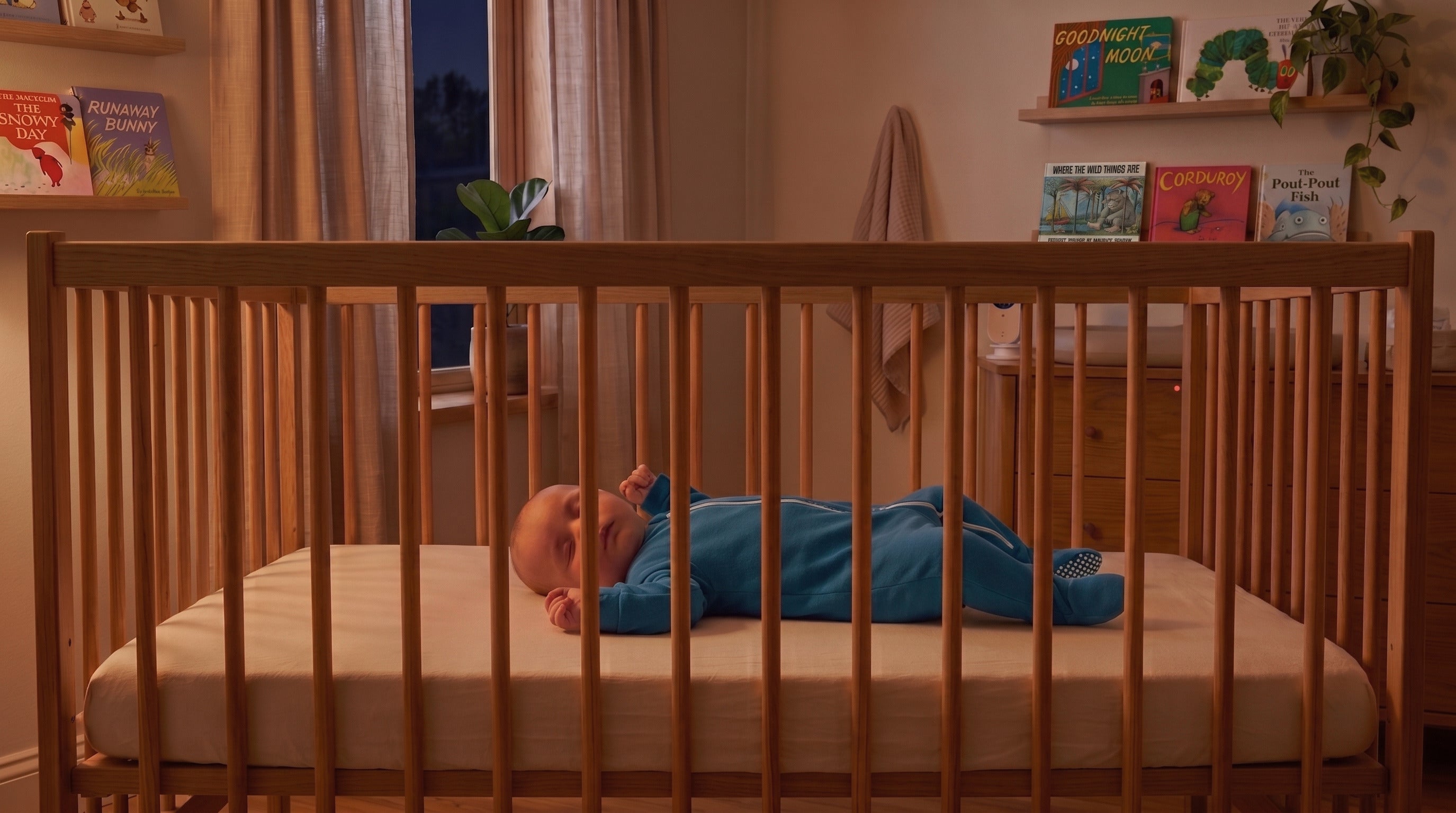
Many sleep experts recommend keeping a nursery between 68 and 72 degrees Fahrenheit for comfortable sleep.
-
If a baby feels sweaty, flushed, or damp during the night, they are likely too warm. To check if they are too cold, feel their chest or the back of their neck rather than their extremities. Infants have developing circulatory systems, cold hands and feet are perfectly normal and do not mean they need an extra layer.
-
Breathable layers often work better than one heavy layer because they allow parents to make simple adjustments as temperatures change overnight.
-
Soft pajamas made from breathable fabrics may help reduce irritation and help babies feel calmer and cozier at bedtime.
-
Seasonal clothing changes matter too. Lightweight cotton may work well during warmer months, while organic cotton fleece can add warmth during cooler weather without trapping excessive heat.
Baby Sleepwear Tips for Parents
When parents start researching what their baby should wear to sleep, comfort should always be part of the conversation. One of the best baby sleepwear tips is to look for breathable fabrics that help regulate temperature throughout the night. Soft organic cotton is often a popular choice because it feels gentle against sensitive skin while still allowing airflow.
Parents may also want to avoid pajamas with stiff seams, rough tags, or tight elastic that could irritate a baby during sleep. Sleepwear should allow babies to move comfortably while still fitting safely and properly. During cooler months, organic cotton fleece can add cozy warmth without feeling overly heavy or trapping too much heat.
It’s also a good idea to size sleepwear appropriately and wash it gently with mild detergents to help maintain softness over time.
Small Sleepwear Changes Can Lead to a Better Slumber
Is your baby still not sleeping throughout the night? Are they waking up for more than just a quick meal? If so, your baby may not be as comfortable as they could be. And if that’s the case, we encourage you to try organic cotton. When you do so, not only are you making a great choice for your baby, you’re also making a great choice for our planet.
Shop CastleWare’s line of pajamas and sleeper bags today.

Written by CastleWare LLC