Building a Minimalist Capsule Wardrobe for Kids: A Practical Guide to Buying Fewer, Better-Quality Pieces

Capsule wardrobes have moved from niche fashion blogs into the mainstream as shoppers focus more on intentional spending and less on clutter. The numbers back it up. We recently read that the global capsule wardrobe market was valued at approximately $1.3 billion in 2023 and is projected to reach $2.6 billion by 2030. That’s a pretty big sign of how many consumers are embracing the concept.
And then there’s all the economic pressure we’re facing these days. Clothing prices climbed again in April 2026. They’re up nearly 5% over the past year, partly because the conflict involving Iran has pushed up costs for materials such as polyester. Higher gas prices also leave families with less disposable income, and apparel is often one of the first expenses people cut back on.
Instead of buying inexpensive pieces that never coordinate with the rest of the closet, many parents are realizing it's smarter to invest in versatile clothing that gets worn again and again. So what if the same capsule wardrobe concept worked just as well, or even better, for children?
Quick Answer: What Is a Minimalist Capsule Wardrobe for Kids?
A minimalist capsule wardrobe for kids is a small collection of versatile, high-quality clothing built around neutral colors and classic styles. Every piece mixes and matches easily, and fabrics are chosen to stand up to frequent washing. The payoff is less clutter, lower long-term clothing costs, and less waste, since each item gets worn far more often than pieces in an overstuffed closet ever would.
Why Kids May Benefit Even More Than Adults
Children might seem like the worst candidates for a capsule wardrobe, since they outgrow things before the tags fade. But we’re here to tell you just the opposite. Taking a capsule wardrobe approach to kids is actually smart, both financially and stylistically.
Because kids grow quickly, every piece gets used for just a short period of time. Impulse purchases, like the latest Disney or Marvel Comics tee grabbed at checkout, may only get worn a handful of times before they're outgrown. That's money spent on clothes that mostly lived in a drawer.
There’s also this thing called clutter. Between toys, school supplies, and activities, family homes fill up fast. For that very reason, a simpler wardrobe is one less pile to manage. It cuts decision fatigue too. When all clothing pieces work with one another, even a four-year-old can dress herself. This means that parents don't have to referee outfit negotiations at 7 a.m. when they’d rather be enjoying those first few sips of morning coffee.
Buying fewer items doesn't mean buying less clothing overall. It means buying clothing that works harder.
What Belongs in a Kids Capsule Wardrobe?
So, just what belongs in a kids clothing capsule? There's no one correct answer. That said, we've put together a list of what we think should go in a kids capsule wardrobe, whether you're dressing a newborn or a kid in size 8.
-
Everyday tops in coordinating colors
-
Comfortable leggings or pants
-
Shorts for warm weather
-
Bodysuits or onesies for babies
-
A few layering pieces
-
One or two sweaters
-
A wearable blanket or sleeper bag for infants and toddlers
-
Outerwear appropriate for the season
-
Everyday shoes, once they're walking
-
A special occasion outfit, only if needed
The mix matters more than the count. Aim for versatility over quantity: a wardrobe where nearly any top works with nearly any bottom will outperform a bigger one full of single-use outfits.
Choose Quality Over Quantity Every Time
This is the heart of the capsule approach. Quality children's clothing costs more upfront but earns it back in ways cheap clothing can't match.
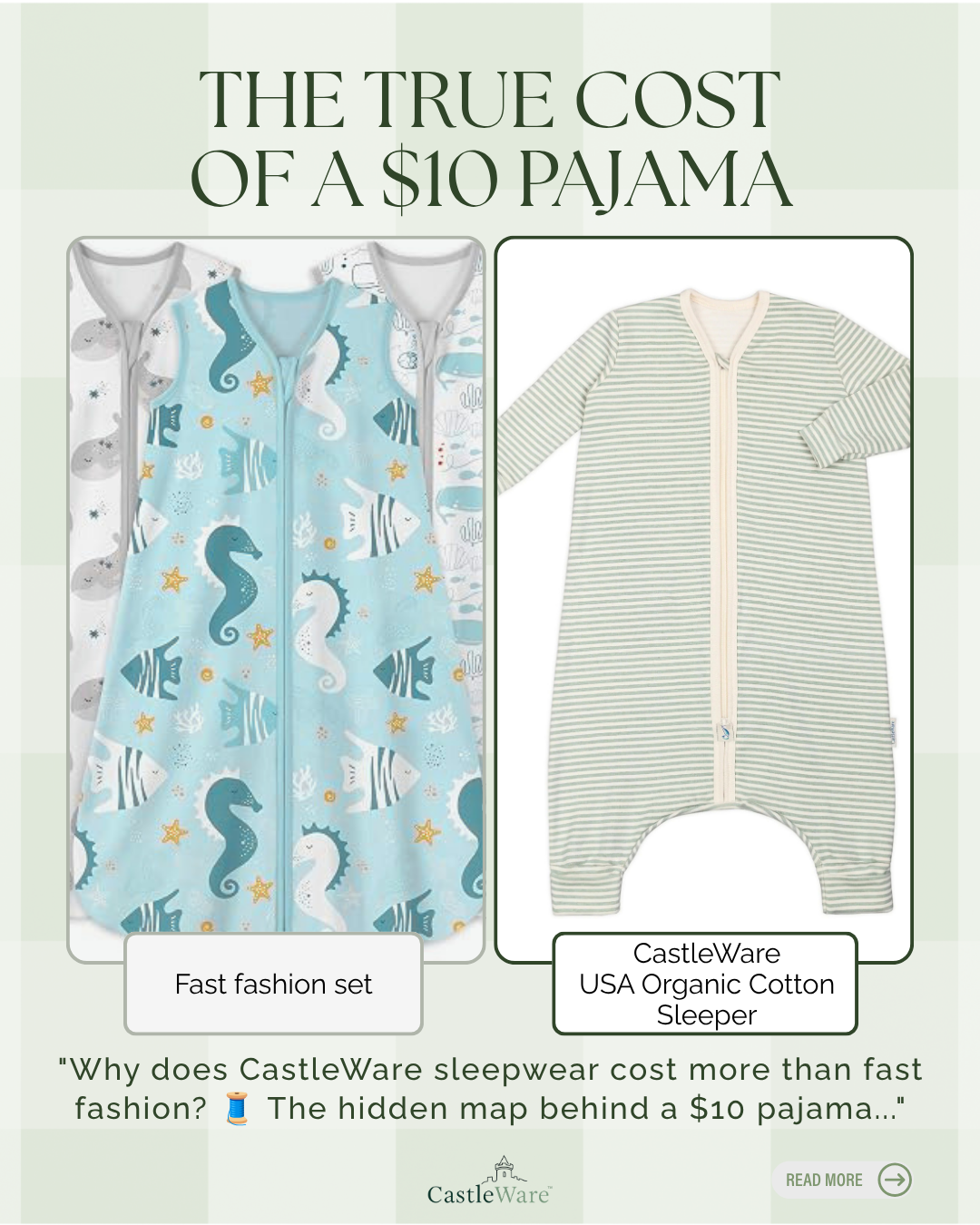
Well-made pieces have better stitching and stronger seams, so they survive playground slides and dozens of wash cycles without pilling, fading, or losing their shape. That matters twice over with kids: their clothes take more abuse than adult clothes ever will, and clothing that holds up can be handed down to a sibling or a friend's child. A shirt worn by three kids costs far less per wear than a bargain tee that sagged after one season.
Fabric is where quality shows up first. Organic cotton is a capsule favorite because it's soft on sensitive skin, breathable through active days, and made without many of the chemicals used in conventional textile production. You can read more about the benefits of organic cotton for babies if you're weighing fabric choices for the youngest family members.
Certifications matter too. Labels like GOTS-certified clothing verify that organic claims are backed by independent standards covering both the fiber and how it was processed. When you're buying fewer pieces, it's worth knowing each one was made well.
Build Around Colors That Work Together
Many impulse purchases never get worn because they don't go with anything else in the closet. No matter how cute it might look hanging on the rack at your local department store, a neon graphic tee that clashes with every pair of pants is a one-outfit item. That’s just the way it is.
Capsule wardrobes solve this by building around a palette. Neutral colors, earth tones, and soft pastels play well together. And, a few coordinating prints keep things from feeling plain. The goal is that every shirt matches multiple bottoms, and vice versa.
Here’s what to ask yourself when shopping for clothing for young kids:
-
Does it match at least three other pieces?
-
Can it be layered?
-
Will it work across multiple seasons?
-
Is it comfortable enough for everyday wear?
-
Will it still look nice after repeated washing?
If most answers are no, skip it, no matter how adorable it is.
Buy for Everyday Life, Not Just the Shopping Trip
Novelty outfits are fun to buy, but they often spend most of their lives hanging in the closet. Think about where your child actually spends their time: school, the playground, daycare, family outings, and bed. Those settings should drive most purchases.
Sleepwear is a good example. Kids spend ten to twelve hours a day in pajamas, which makes soft, warm options like fleece sleepwear for babies some of the hardest-working pieces a child owns. Everyday staples usually deliver the greatest value because they're worn again and again.
A Capsule Wardrobe Can Save More Than Money
The financial case is strong, but the everyday benefits may win you over first.
-
Less laundry sorting is a huge benefit because who has time to spend hours a week in their laundry room?
-
Easier packing, because any handful of items makes a full set of outfits.
-
Less closet clutter and simpler mornings.
And beyond your own household, fewer discarded garments means less textile waste, a real problem in an era of fast fashion for kids. With clothing costs rising, intentional shopping isn't just a lifestyle choice. It's a practical response to the moment.
Buy Less. Wear More. Enjoy It Longer.
Rising clothing prices make thoughtful shopping more worthwhile than ever. High-quality basics routinely outlast several rounds of inexpensive replacements, and kids don't need overflowing closets to be well dressed. A small wardrobe filled with well-made pieces in colors that work together is often the more practical path for busy families.
If you're looking for thoughtfully made children's clothing built for everyday wear and repeated washing, explore CastleWare's collection of organic, timeless pieces designed to be worn, washed, and loved for years.
Frequently Asked Questions About Buildinga Minimalist Capsule Wardrobe for Kids
How many clothing items should be in a kids capsule wardrobe?
There's no magic number. A toddler in daycare may need more changes of clothes than a ten-year-old, and a Minnesota winter demands more layers than a San Diego summer. Most families land somewhere between 20 and 35 pieces per season, but versatility matters more than the count. If every top pairs with every bottom, even a small kids capsule wardrobe produces dozens of outfit combinations.
Is buying higher-quality kids clothing really worth the cost?
Usually, yes, when you measure cost per wear instead of price per item. A $28 organic cotton shirt worn 60 times costs less than 50 cents per wear. A $9 shirt that stretches out after 10 washes costs almost twice that, and then needs replacing. Add hand-me-down potential, and well-made sustainable children's clothing often becomes the cheaper choice over time.
How often should you update a child's capsule wardrobe?
Plan a quick review at the start of each season and after growth spurts. Pull out anything outgrown or genuinely worn out, note the gaps, and replace only what's needed. The goal is never to start over. A well-built capsule evolves a few pieces at a time, which keeps spending predictable and closets manageable.

Written by CastleWare LLC